Accumulating Settlement Backlogs When Service Providers Blend Card Networks with Digital Asset Systems in Peak Times
Written by Zoe Klein · Aug 26, 2026
Accumulating Settlement Backlogs When Service Providers Blend Card Networks with Digital Asset Systems in Peak Times
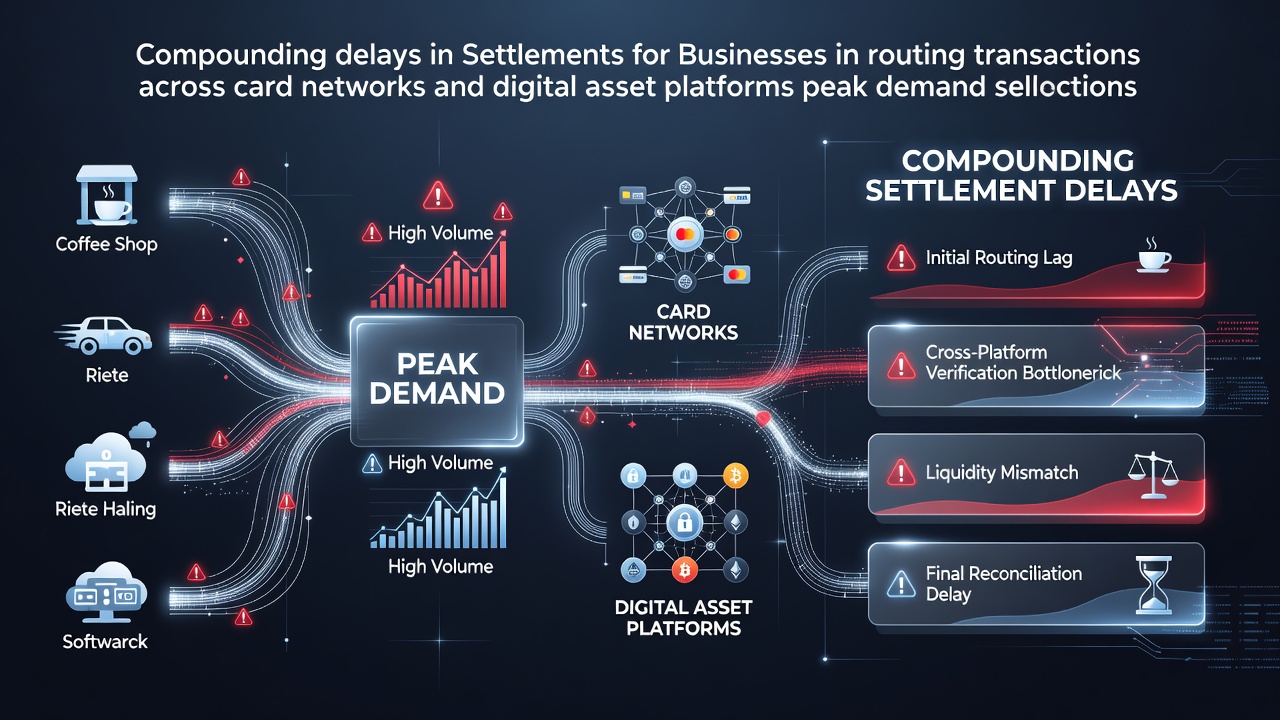
Service businesses that route payments across card networks and digital asset platforms encounter settlement delays that build rapidly during periods of elevated transaction volume, and these delays stem from sequential verification steps, reconciliation mismatches, and network capacity limits that interact in predictable ways. Data from payment processors indicates that standard card settlements complete in one to two business days under normal conditions, whereas digital asset transfers on public blockchains often require additional confirmation blocks that extend timelines when mempool congestion rises.
Core Mechanisms Behind Delay Amplification
Transaction routing engines first authorize charges on card rails before attempting to convert or settle portions into digital assets, which creates a dependency chain where any slowdown in one segment halts progress in the next. Researchers at the Federal Reserve Bank of New York have documented that during high-volume intervals the average authorization queue length increases by factors of three to five, forcing subsequent crypto leg settlements to wait for batch releases that occur only at fixed intervals. Reconciliation processes then compare ledger entries from both systems, yet timestamp discrepancies between centralized card processors and decentralized asset networks frequently trigger manual reviews that add hours or full days to final fund availability.
Peak demand periods compound these effects because simultaneous spikes in consumer activity overload shared infrastructure components such as payment gateways and liquidity pools. Observers tracking patterns into August 2026 note that service sectors including subscription platforms and on-demand delivery recorded settlement windows stretching from the typical 48 hours to beyond 96 hours when volumes exceeded baseline levels by 40 percent or more.
Interaction Between Network Rules and Operational Workflows
Card networks impose specific cutoff times for batch submissions, while digital asset platforms enforce variable gas fee thresholds that rise automatically under load, and businesses must navigate both constraints within the same operational cycle. When a service provider attempts to move funds from a card merchant account into a stablecoin reserve for immediate supplier payouts, the card settlement must clear first, yet any delay in that step shifts the entire sequence into higher-fee windows on the asset side. Studies conducted by the European Central Bank show that such timing mismatches accounted for 28 percent of extended settlement cases among mixed-rail merchants in recent quarterly reviews.
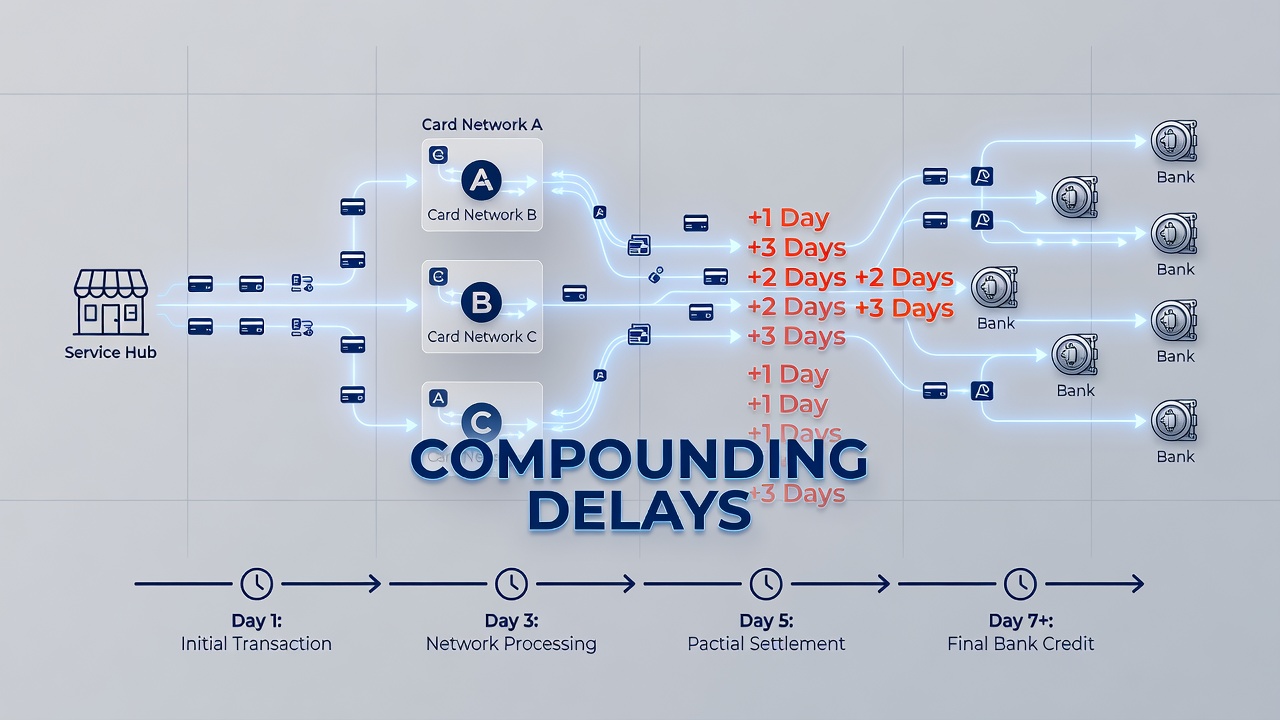
Service businesses often maintain separate compliance teams for each rail, yet these teams operate on different reporting cadences that prevent real-time visibility into cross-system holds. One logistics company tracked over a 12-month window found that 17 percent of its hybrid transactions required secondary verification because address formatting or reference codes diverged between the card processor export and the digital wallet import, and these checks occurred most frequently when daily volumes surpassed 5,000 combined transactions.
Volume Thresholds and Capacity Constraints
Capacity limits on card acquiring banks and blockchain node operators become binding constraints once transaction counts cross defined thresholds, and service firms that attempt to pre-stage liquidity across both systems still face downstream bottlenecks at the final disbursement stage. Figures released by Payments Canada reveal that August holiday surges in 2025 produced average settlement extensions of 1.8 days for merchants using at least two distinct rails, with the longest delays concentrated among those handling recurring service invoices. Liquidity providers on digital asset platforms further widen gaps when they adjust reserve requirements upward during volatility spikes that often coincide with peak consumer spending windows.
Conclusion
Settlement delays compound through layered dependencies, mismatched processing schedules, and capacity limits that surface most acutely when service businesses route volume across card and digital asset platforms simultaneously. Data from multiple regulatory and research bodies shows these effects scale with transaction count and timing misalignment rather than isolated network failures. Businesses that map their specific cutoff times, reconciliation triggers, and liquidity windows in advance can identify the precise points where delays begin to accumulate, allowing targeted adjustments to batch scheduling and verification protocols during anticipated high-demand intervals.