Community-Sourced Data Shapes Subscription Payment Strategies Across Rails
Written by Frankie Keller · Aug 26, 2026
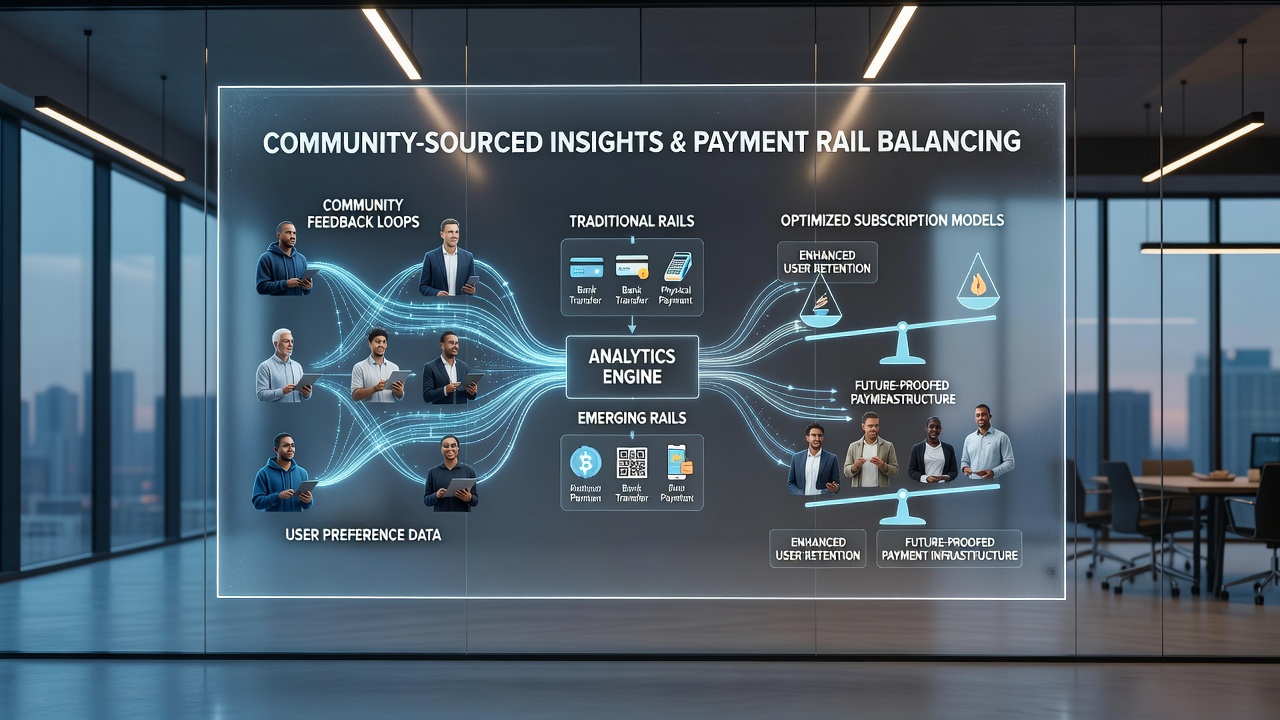
Community-Sourced Data Shapes Subscription Payment Strategies Across Rails
Subscription service providers collect community-sourced insights through forums, social platforms, and direct feedback channels, then apply those patterns to decisions about traditional rails such as credit cards and ACH transfers alongside emerging options including digital wallets and cryptocurrency settlements. Data from user communities reveals preferences for speed, cost, and security that guide integration timelines and feature prioritization, while regulatory updates continue to influence which rails providers activate first.
Collecting and Analyzing User Input Patterns
Providers monitor discussion threads on platforms where subscribers share experiences with failed transactions or preferred checkout flows, and researchers have observed that aggregated sentiment often highlights friction points in card authorization delays versus instant wallet confirmations. These insights feed into internal dashboards that track volume spikes, and figures released around August 2026 showed subscription platforms increasing crypto rail testing after community posts indicated growing comfort with blockchain-based renewals in specific regions. Analysts note that sentiment analysis tools parse thousands of comments weekly to identify recurring themes, such as requests for lower fees during renewal periods or concerns over chargeback timelines on traditional networks.
Traditional Rails and Community Signals
Card networks and bank transfers remain dominant for most subscription models because established infrastructure supports high-volume recurring billing with predictable compliance checkpoints, yet community feedback frequently flags issues like declined international cards during regional banking outages. Providers respond by adjusting retry logic and adding backup rails based on where users report the highest drop-off rates, and studies from the Federal Reserve indicate that community-reported decline reasons correlate strongly with actual authorization failure data across multiple service categories. Observers note that subscription services use these reports to fine-tune merchant category codes and authentication flows, while maintaining core reliance on card rails that already meet global security standards.
Integrating Emerging Rails Through Shared Experiences
Digital asset options and mobile payment methods enter provider roadmaps once community data shows sufficient subscriber demand and acceptable risk profiles, and case examples include services that introduced stablecoin renewals after forum threads documented consistent requests from international users facing currency conversion costs. Research indicates that providers cross-reference these requests against transaction success rates before full rollout, which reduces the chance of widespread adoption failures. What's notable is that community moderators often surface edge cases such as wallet compatibility problems or tax reporting questions that internal teams then address through updated documentation and support resources.

Providers weigh settlement speed against volatility when evaluating crypto rails, and community posts frequently compare final amounts received after network fees, which helps teams decide whether to offer discounts for early crypto payments or maintain standard pricing across all methods. European Central Bank publications have tracked similar shifts in consumer payment preferences, and subscription operators reference those regional patterns when deciding which new rails to activate for European audiences first.
Balancing Compliance and User Expectations
Regulatory requirements around anti-money laundering and consumer protection apply differently across rails, and community insights help providers anticipate where subscribers might encounter verification hurdles during onboarding. Those who've studied adoption curves report that services incorporating user-reported compliance pain points into their processes achieve higher retention after new rail launches. Providers therefore maintain parallel support channels that collect real-time feedback on verification delays, then refine automated checks accordingly while preserving the audit trails required by oversight bodies.
Operational Adjustments Based on Collective Input
Teams route a portion of renewal attempts through alternative rails during peak periods when community reports indicate card network congestion, and data shows measurable reductions in involuntary churn when these adjustments occur proactively. Subscription platforms also use community polls to test messaging around new payment options before broader deployment, which surfaces terminology that resonates with different user segments. Such iterative testing keeps feature releases aligned with actual subscriber needs rather than assumptions drawn solely from internal metrics.
Conclusion
Community-sourced insights continue to inform how subscription providers calibrate the mix of traditional and emerging payment rails by supplying granular, real-world signals on performance, cost, and usability. Providers that systematically incorporate these inputs maintain competitive renewal rates while meeting evolving regulatory and technical standards across markets.