Coordinating Multi-Rail Settlements: Supply Chain Tactics for Export Currency Fluctuations
Written by Jonas Fischer · Aug 30, 2026
Coordinating Multi-Rail Settlements: Supply Chain Tactics for Export Currency Fluctuations
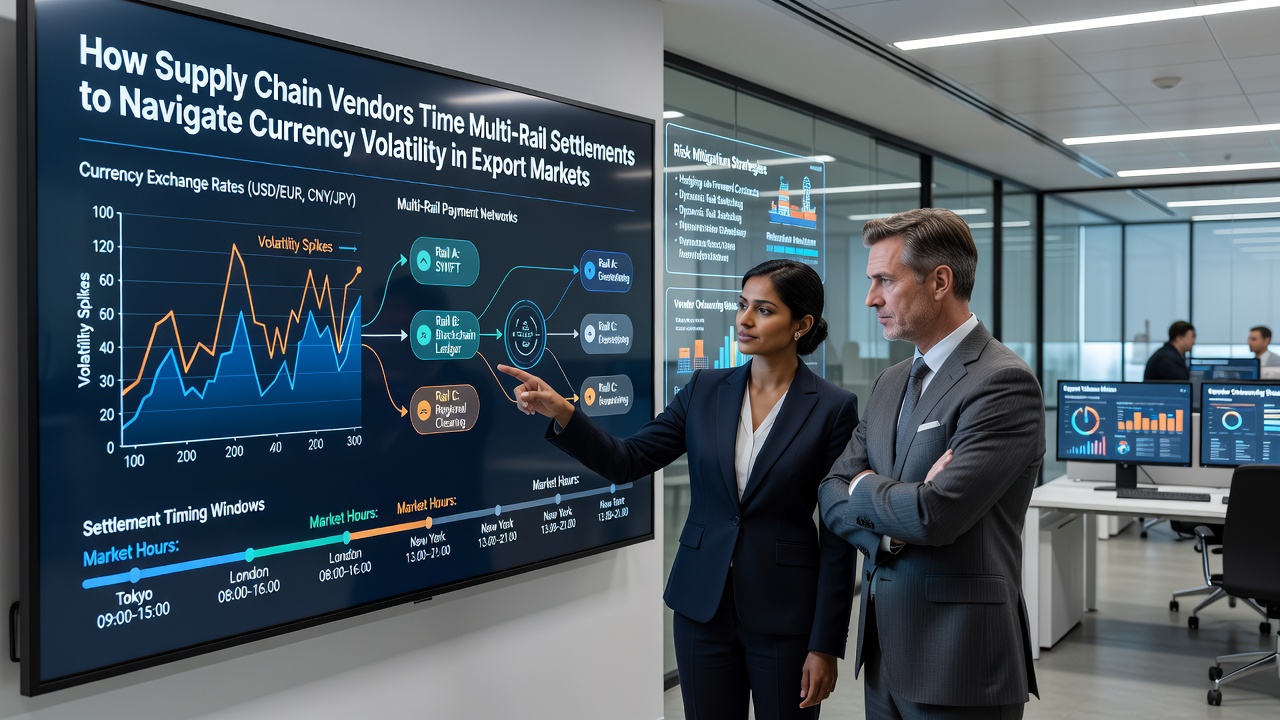
Supply chain vendors in export markets coordinate multiple settlement rails to offset currency swings that hit margins during cross-border transactions, and they adjust timing windows based on forward rate indicators from major trading pairs. Data from trade finance platforms shows that firms handling goods from Asia to Europe often split payments across SWIFT wires and local clearing systems, which lets them lock in rates when volatility spikes during quarterly reporting periods. Observers note that this approach reduces exposure because vendors monitor real-time feeds from central banks and shift portions of settlements to rails with lower latency when exchange rates move against their base currency.
Core Mechanisms Behind Timed Settlements
Vendors track currency pairs like USD/EUR and CNY/GBP through integrated treasury systems that pull daily data from sources such as the Bank for International Settlements, and they trigger partial settlements on faster rails when forecasts signal a 2 percent or greater shift within 48 hours. Research indicates these operators combine traditional correspondent banking with emerging local instant payment networks in target markets, which creates staggered flows that align with contract milestones rather than single lump-sum transfers. One study from the World Bank highlighted how exporters in Latin America timed 60 percent of their receivables through multi-currency accounts during periods of elevated volatility, cutting realized losses by coordinating release dates with central bank intervention announcements.
August 2026 brought additional layers when several Asian export hubs updated their clearing calendars, prompting vendors to recalibrate rail priorities ahead of anticipated rate adjustments from the European Central Bank. Those adjustments mattered because data showed a 15 percent increase in same-day settlement options across regional platforms, allowing tighter synchronization between physical goods movement and financial flows. Experts have observed that the practice relies on predictive models fed by historical volatility indices, yet actual execution still depends on vendor relationships with multiple financial intermediaries who provide the necessary liquidity windows.
Regional Patterns in Rail Selection
Export vendors operating between North America and Southeast Asia frequently route portions of payments through ACH equivalents and real-time gross settlement systems to exploit intraday rate differences, while European counterparts lean on TARGET2 and SEPA Instant for intra-zone stability. Figures from industry reports reveal that timing decisions often cluster around month-end reporting cycles, when currency desks release updated hedging costs that influence whether a vendor accelerates or delays a rail. And because volatility tends to cluster around geopolitical events or commodity price swings, operators maintain contingency protocols that automatically divert flows to the least exposed rail once predefined thresholds are crossed.
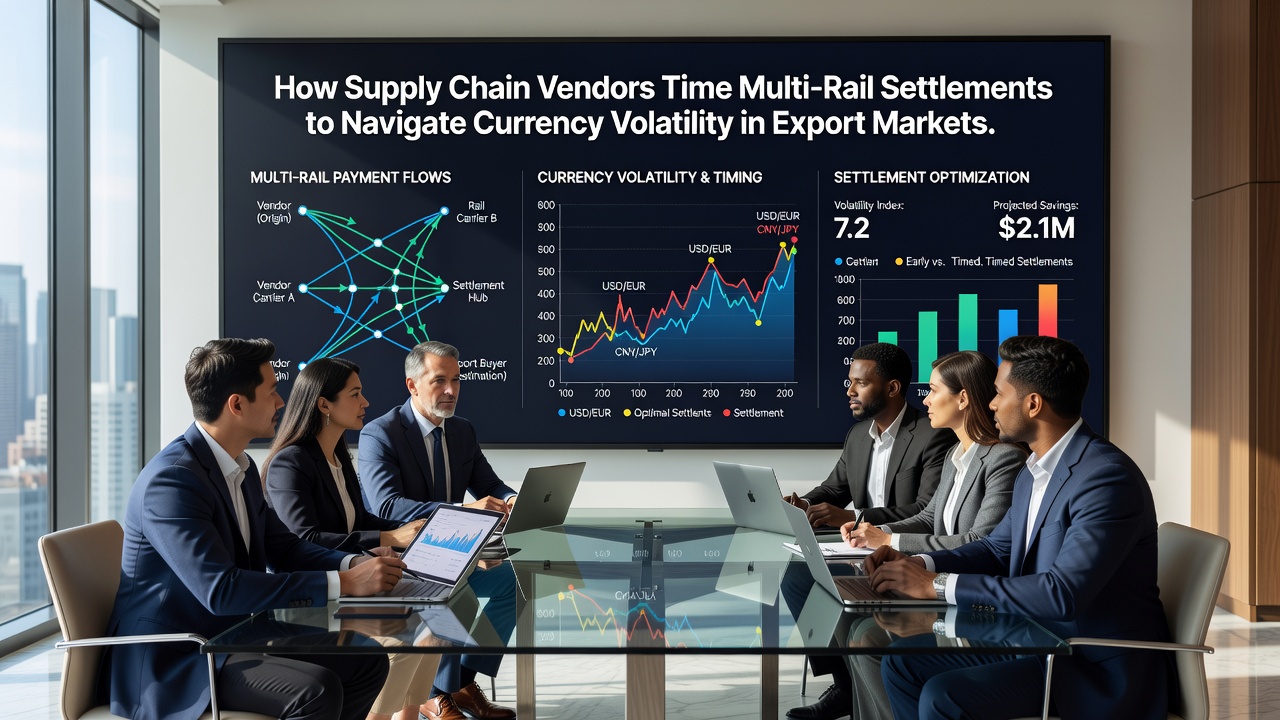
Take one electronics components supplier that documented its process of splitting settlements across three rails during the 2025-2026 fiscal year: the primary SWIFT leg handled 50 percent of value at fixed forward rates, a secondary local transfer absorbed 30 percent timed to favorable spot movements, and a tertiary digital ledger rail covered the balance when speed reduced overall exposure. Data shows this layered method produced measurable reductions in variance compared with single-rail approaches, particularly when export contracts spanned multiple quarters with embedded currency clauses.
Compliance and Infrastructure Considerations
Regulatory frameworks in key export destinations require vendors to document settlement timing rationales when using multiple rails, which adds audit layers but also creates transparency that banks and customs authorities can verify. Observers note that integration with enterprise resource planning software allows automatic flagging of rail changes that affect tax reporting or anti-money laundering checks, and compliance teams review these flags before final execution. Research from academic centers in Australia and Canada has examined how these documentation requirements influence settlement speed, revealing that firms with automated compliance modules maintained tighter timing windows without increasing regulatory incidents.
Yet infrastructure gaps still constrain some regions, where legacy banking hours limit the availability of certain rails during peak volatility periods. Vendors respond by maintaining standby agreements with alternative providers, which ensures fallback options when primary networks experience delays or rate locks that no longer match contract needs. The reality is that success hinges on continuous monitoring rather than one-time setup, because currency markets shift daily and export schedules rarely align perfectly with optimal settlement windows.
Conclusion
Supply chain vendors continue refining multi-rail timing strategies as export markets evolve, drawing on data feeds, regulatory updates, and infrastructure improvements to manage currency exposure. Patterns emerging through 2026 suggest that coordinated rail selection will remain central to margin protection, especially as more regions adopt faster clearing options and central banks release enhanced volatility indicators. Those tracking these developments see measurable benefits when timing aligns across financial, logistical, and compliance dimensions, which keeps export operations resilient amid ongoing global currency movements.