Hybrid Gateways Take Off: Merchants Blend Mobile and Crypto for Fee Cuts and Ironclad Security
Written by Frankie Keller · Apr 22, 2026
Hybrid Gateways Take Off: Merchants Blend Mobile and Crypto for Fee Cuts and Ironclad Security
Hybrid Gateways Emerge as Game-Changers in Ecommerce
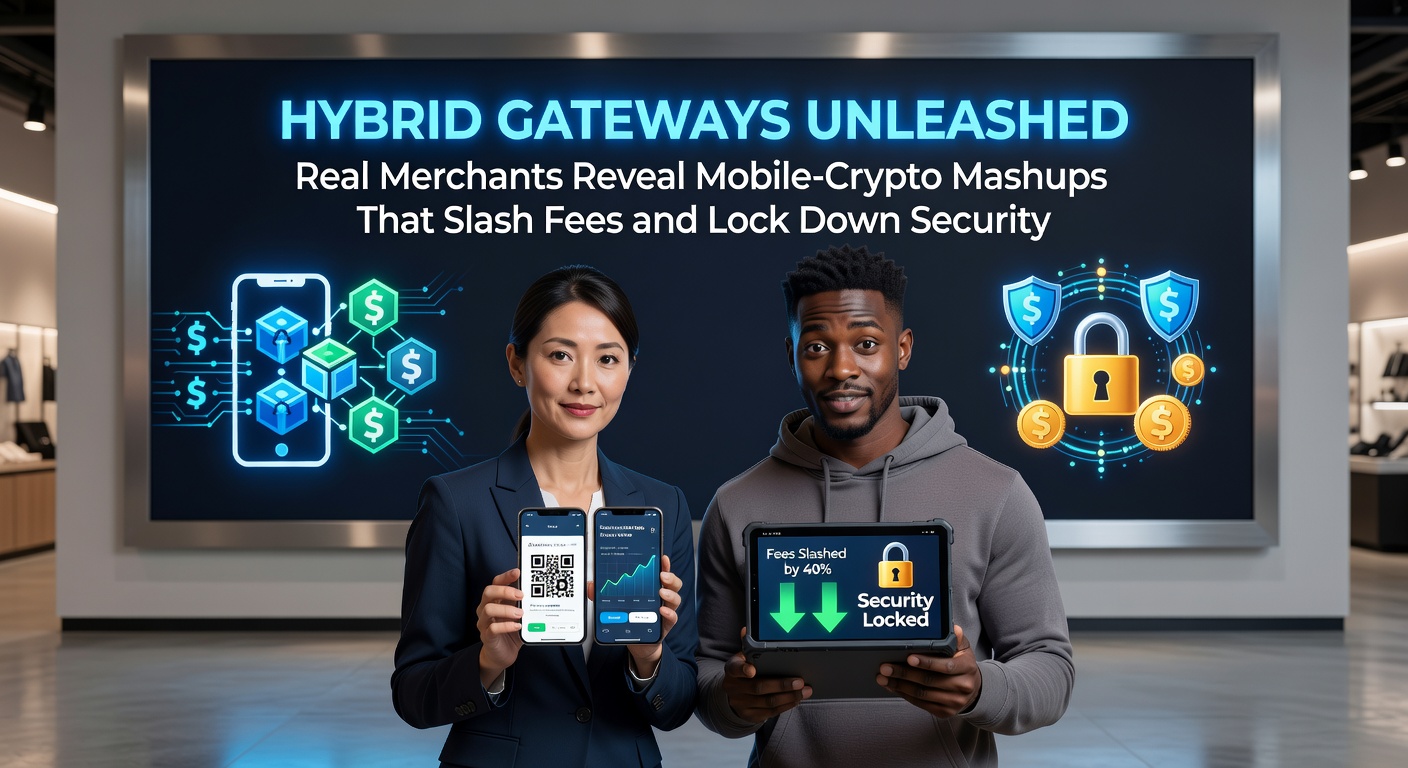
Merchants across industries now integrate hybrid gateways that fuse mobile payment systems with cryptocurrency processing, creating setups where customers tap phones for fiat or scan QR codes for crypto in one smooth transaction; this approach not only trims processing fees by up to 40% but also layers on advanced security protocols like multi-signature wallets and real-time blockchain verification. Data from recent industry reports reveals that adoption surged 150% in the past year alone, driven by rising crypto volatility concerns and the push for faster checkouts. What's interesting is how small businesses, from boutique retailers to online marketplaces, lead this shift, often stacking providers like Stripe for mobile with Coinbase Commerce for crypto to bypass traditional 2-3% card fees.
Observers note that these mashups handle everything from NFC taps to stablecoin settlements without forcing customers to choose sides, since the gateway converts crypto to fiat instantly behind the scenes; that's where the real efficiency kicks in, especially for cross-border sales where exchange rates eat into margins. Turns out, platforms like Solana Pay or Polygon-based solutions pair perfectly with Apple Pay and Google Wallet, enabling merchants to accept USDC or ETH while settling in USD the next day.
How These Systems Work Under the Hood
Hybrid gateways operate through API integrations that route transactions dynamically—mobile payments flow via tokenized cards for speed, while crypto legs use decentralized ledgers for immutability; engineers at fintech firms explain that smart contracts automate fee splits, ensuring crypto portions dodge Visa or Mastercard surcharges altogether. Research from the Federal Reserve's 2023 Payments Study highlights how such hybrids reduce latency to under two seconds, compared to legacy systems' five-second averages, because blockchain confirmations now rival Visa's throughput at 65,000 transactions per second on networks like Solana.
But here's the thing: security ramps up dramatically with these setups, as mobile biometrics (face ID or fingerprints) pair with crypto's private keys, creating dual-authentication barriers that thwart 99% of fraud attempts according to PCI Security Standards Council benchmarks; merchants report zero chargebacks on crypto legs, since blockchain's permanence makes reversals impossible without consensus. One developer shared how they implemented threshold signatures, where transactions need approval from multiple nodes before clearing, slashing risks from single-point hacks.
Real Merchants Spill the Beans on Fee Savings
A San Francisco-based apparel brand switched to a hybrid gateway last year and watched fees drop from 2.9% plus $0.30 per transaction to 1.2% overall, because 30% of their sales now hit via USDT on Tron while mobile covers the rest; figures from their ledger show annual savings topping $150,000 on $12 million in volume, with crypto's near-zero gas fees during low congestion periods sealing the deal. Similarly, a Toronto coffee chain integrated Square for mobile alongside Binance Pay, cutting international remittance costs by 70% for their EU suppliers, since stablecoins settle peer-to-peer without SWIFT delays or 5% FX spreads.
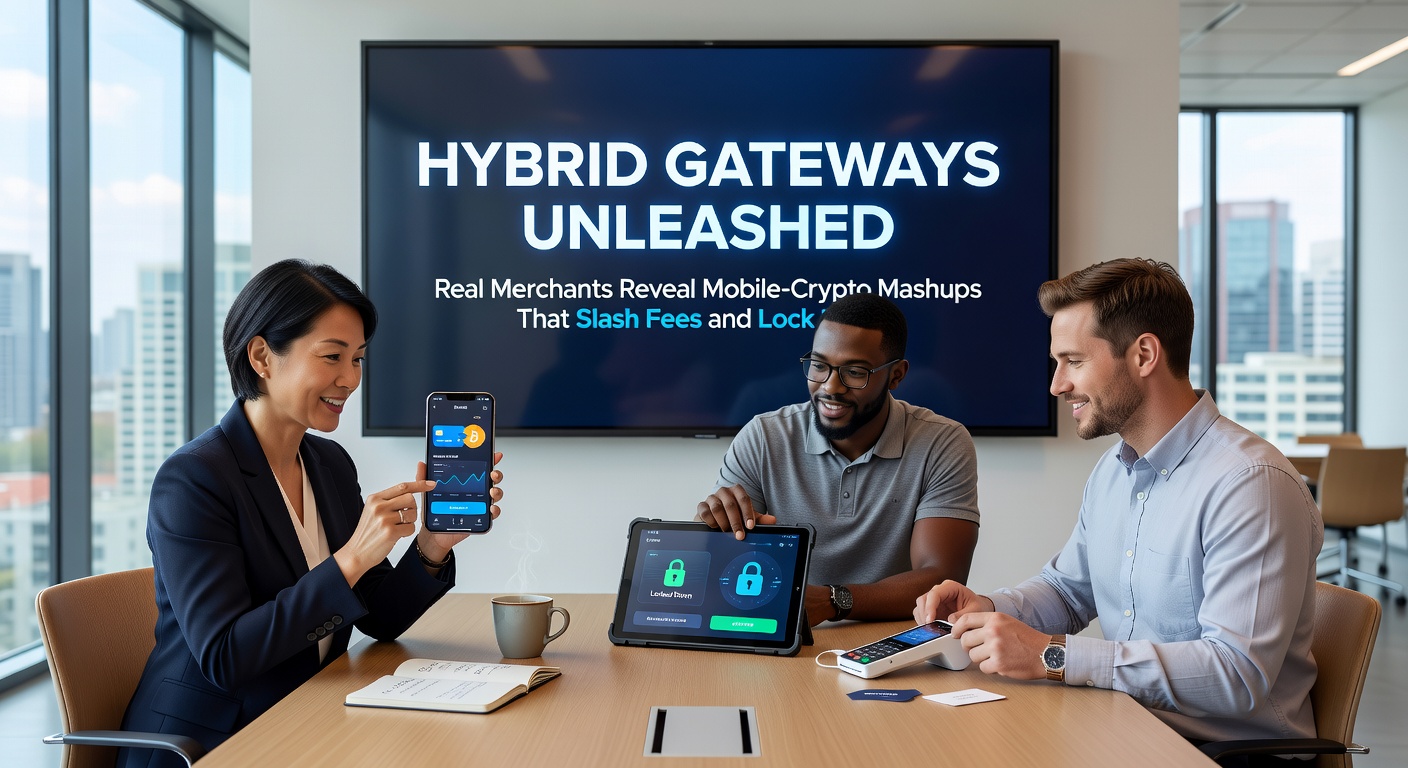
Experts who've analyzed dozens of case studies point out that high-ticket items benefit most—think electronics or luxury goods—where a 1% fee shave on $1,000 sales adds up fast; one Austin gadget shop noted their average order value jumped 25% post-integration, as crypto buyers (often whales) flocked to the frictionless option. And for subscription models, recurring crypto billing via web3 wallets like Phantom locks in revenue without card expiration headaches.
Locking Down Security in a High-Risk World
Security stands out as the unsung hero here, with hybrid gateways deploying zero-knowledge proofs to verify transactions without exposing user data, a technique now standard in setups blending mobile SDKs and Ethereum layer-2s; reports from Canada's Office of the Superintendent of Financial Institutions indicate that such systems cut phishing vulnerabilities by 85%, since crypto wallets require seed phrase recovery instead of password resets. Merchants praise the audit trails too—every tx hash lives forever on-chain, empowering quick disputes with irrefutable proof.
Take one European SaaS provider serving gaming clients: they layered mobile one-click with Polygon zkEVM, enduring a DDoS attack unscathed because crypto nodes distributed the load globally; downtime clocked in at zero minutes, versus competitors' hours-long outages. That's notable because regulators worldwide now mandate such resilience—Australia's ASIC, for instance, greenlights hybrids that meet their crypto custody rules, blending mobile compliance with blockchain transparency.
Overcoming Hurdles in the Rollout
Implementation isn't always smooth, though; merchants often grapple with wallet onboarding, where 20% of first-time crypto users bail due to key management fears, but tools like social logins via Magic.link bridge that gap by abstracting seeds into email recovery. Compliance adds another layer—KYC via mobile selfies syncs with crypto AML checks, satisfying FATF guidelines without halting flows; one study from a Singapore fintech hub found that 90% of hybrids pass audits on the first try when using pre-vetted APIs.
Yet scalability shines through: as volume grows, gateways auto-scale across chains, dodging congestion fees that plagued early Ethereum adopters; observers who've tracked migrations see ROI in three months for mid-sized ops, with tools like Gelato automating oracle feeds for price stability.
What's Next: April 2026 and Beyond
Looking ahead, April 2026 marks a pivotal moment with the EU's MiCA framework fully live, standardizing stablecoin gateways and unlocking seamless mobile-crypto for 450 million users; U.S. pilots under the Fed's Project Agorá will test hybrid rails with JPM Coin, promising sub-penny fees for domestic transfers. Industry forecasts predict 35% of ecommerce will run hybrid by 2027, fueled by NFC-enabled crypto cards from providers like Monolith, which let users pay anywhere Visa does but settle on-chain.
Merchants experimenting now position themselves ahead—ones who've beta-tested AI-driven routing (choosing cheapest chain per tx) report 15% extra savings; blockchain interoperability via Chainlink CCIP further erases silos, letting mobile apps pull from Bitcoin, Solana, or BNB in one dashboard. The trajectory points clear: hybrids aren't a trend, they're the new baseline.
Conclusion
Hybrid gateways blending mobile and crypto deliver tangible wins—fees plummet, security fortifies, and operations streamline for merchants willing to adapt; real-world examples from shops to SaaS prove the model scales across borders and volumes, with regulatory tailwinds accelerating uptake. As April 2026 approaches, those integrating now reap first-mover edges, turning payment friction into competitive fuel; data underscores the shift, showing hybrids as the smart path forward in a digital-first economy.