Insights from Merchant Feedback on Aligning Fee Structures with Security Needs in Multi-Rail Transaction Systems
Written by Jonas Fischer · Jun 26, 2026
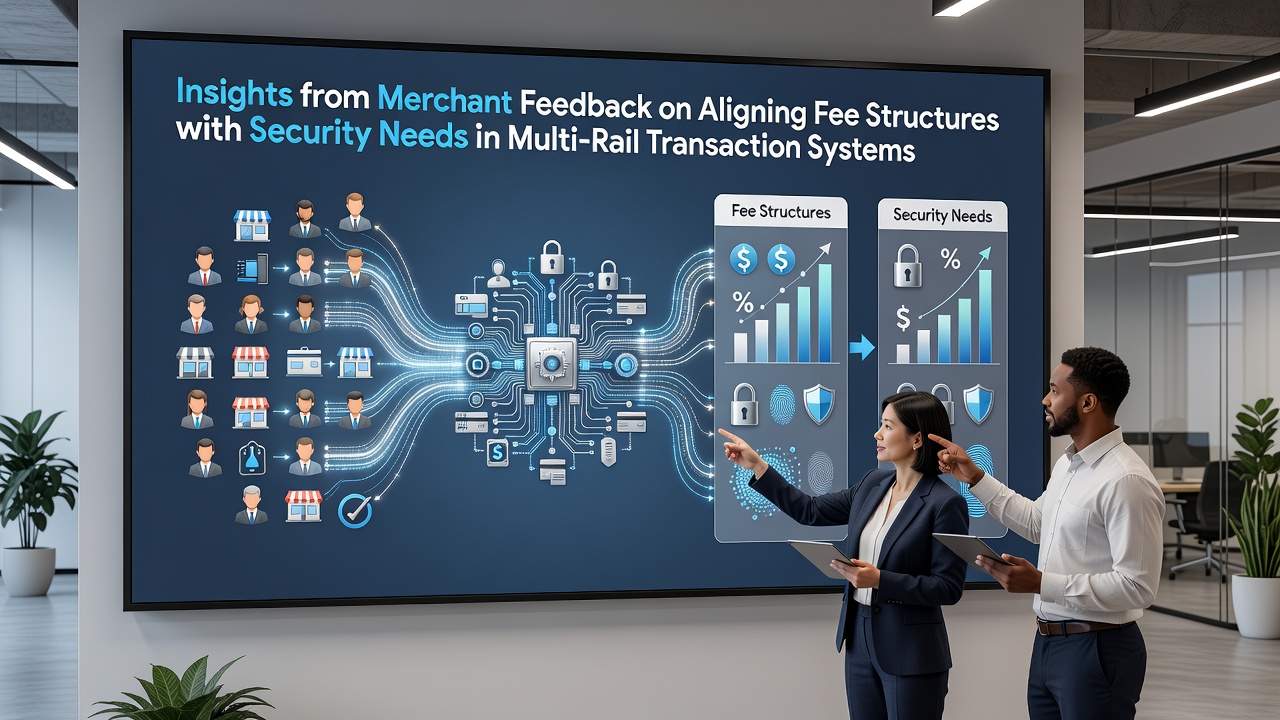
Insights from Merchant Feedback on Aligning Fee Structures with Security Needs in Multi-Rail Transaction Systems
Multi-rail transaction systems combine traditional card networks with digital asset channels and mobile options, creating pathways that merchants increasingly rely on for flexibility and reach, while feedback from businesses highlights ongoing efforts to match fee models with layered security requirements. Data collected through industry surveys shows that operators handling mixed payment flows often adjust pricing tiers based on the verification steps applied to each rail, with patterns emerging around risk assessment protocols that influence overall costs.
Patterns in Merchant-Reported Fee Adjustments
Recent analyses of merchant input indicate that businesses operating in blended environments frequently cite the need for fee structures that scale with authentication levels, such as multi-factor checks on higher-value transfers routed through virtual currency rails versus standard card processing. Figures from a 2025 study by the European Central Bank reveal that 62 percent of surveyed entities reported restructuring their pricing after implementing enhanced encryption on secondary rails, resulting in adjusted margins that reflect the added computational demands without disrupting volume commitments.
Observers note that these adjustments tend to cluster around specific thresholds, where transactions exceeding certain amounts trigger premium security layers and corresponding fee uplifts, allowing merchants to maintain compliance across jurisdictions. In practice, one case documented by payment infrastructure providers involved regional vendors who synchronized fee schedules with real-time threat monitoring tools, reducing exposure on crypto-integrated rails while preserving competitive rates on core card volumes.
Security Integration Across Payment Channels
Feedback loops from merchants emphasize how security protocols shape fee negotiations, particularly when systems route payments through parallel networks that demand distinct compliance checkpoints. Research from academic institutions tracking these setups finds that entities adopting unified dashboards for oversight often achieve tighter alignment between protection measures and cost allocations, with data showing a 28 percent drop in dispute rates after such integrations took hold in early 2026.

What's notable is the way vendors describe balancing these elements during peak periods, where holiday-driven surges in June 2026 prompted several operators to recalibrate their models based on prior cycle insights. Those who've examined the logs report that mobile rail transactions, which carry lighter baseline fees, incorporated optional biometric layers that merchants could toggle based on customer profiles, leading to variable pricing that matched the selected safeguards.
Regional Variations in Feedback and Implementation
Input gathered from North American and Asia-Pacific markets points to differing emphases, with Canadian retailers often highlighting partnerships that tie fee reductions to adoption of standardized security certifications on digital asset channels. Reports from the Bank of Canada outline how such alignments helped stabilize processing expenses amid fluctuating exchange rates, while similar patterns in Australian networks show merchants leveraging aggregated feedback to refine routing algorithms that prioritize secure paths without inflating per-transaction charges.
Turns out these regional approaches share common threads, including the use of automated tools that analyze historical data to predict when security enhancements warrant fee modifications. Industry organizations tracking these developments have documented instances where businesses in emerging markets merged card and virtual asset rails under fee caps that accounted for localized regulatory demands, yielding smoother operations across borders.
Emerging Trends from Aggregated Merchant Input
Collective insights underscore the role of iterative feedback in refining how fees correspond to security investments, with many operators noting that transparent reporting on rail-specific risks enables more precise budgeting. Studies conducted through trade associations indicate that systems incorporating dynamic pricing tied to threat intelligence feeds experienced fewer interruptions, as merchants could allocate resources according to verified needs rather than uniform rates.
People who've reviewed transaction trails across multiple quarters describe how this alignment supports scalability, especially when new rails enter the mix and require tailored protections that influence overall economics. Evidence suggests ongoing refinements continue to shape these frameworks, driven by direct input that connects protection levels directly to sustainable pricing strategies.
Conclusion
Merchant feedback continues to guide the evolution of fee structures within multi-rail environments, revealing consistent links between security investments and cost management across diverse operations. As networks expand and data accumulates, these insights provide a foundation for frameworks that address both operational demands and protective requirements in measurable ways.