Layering Gateways: Merchants Stack Mobile and Crypto for Frictionless Sales
Written by Frankie Keller · Apr 20, 2026
Layering Gateways: Merchants Stack Mobile and Crypto for Frictionless Sales
Understanding Gateway Layering in Modern Commerce
Merchants increasingly layer payment gateways, stacking mobile wallets like Apple Pay or Google Pay atop cryptocurrency processors such as Coinbase Commerce or BitPay, creating pathways that slash checkout friction and boost conversion rates; data from a recent Federal Reserve Payments Study reveals that U.S. digital wallet adoption surged 25% in 2025 alone, while crypto transaction volumes hit $2.5 trillion globally, prompting savvy sellers to blend these channels for uninterrupted sales flows.
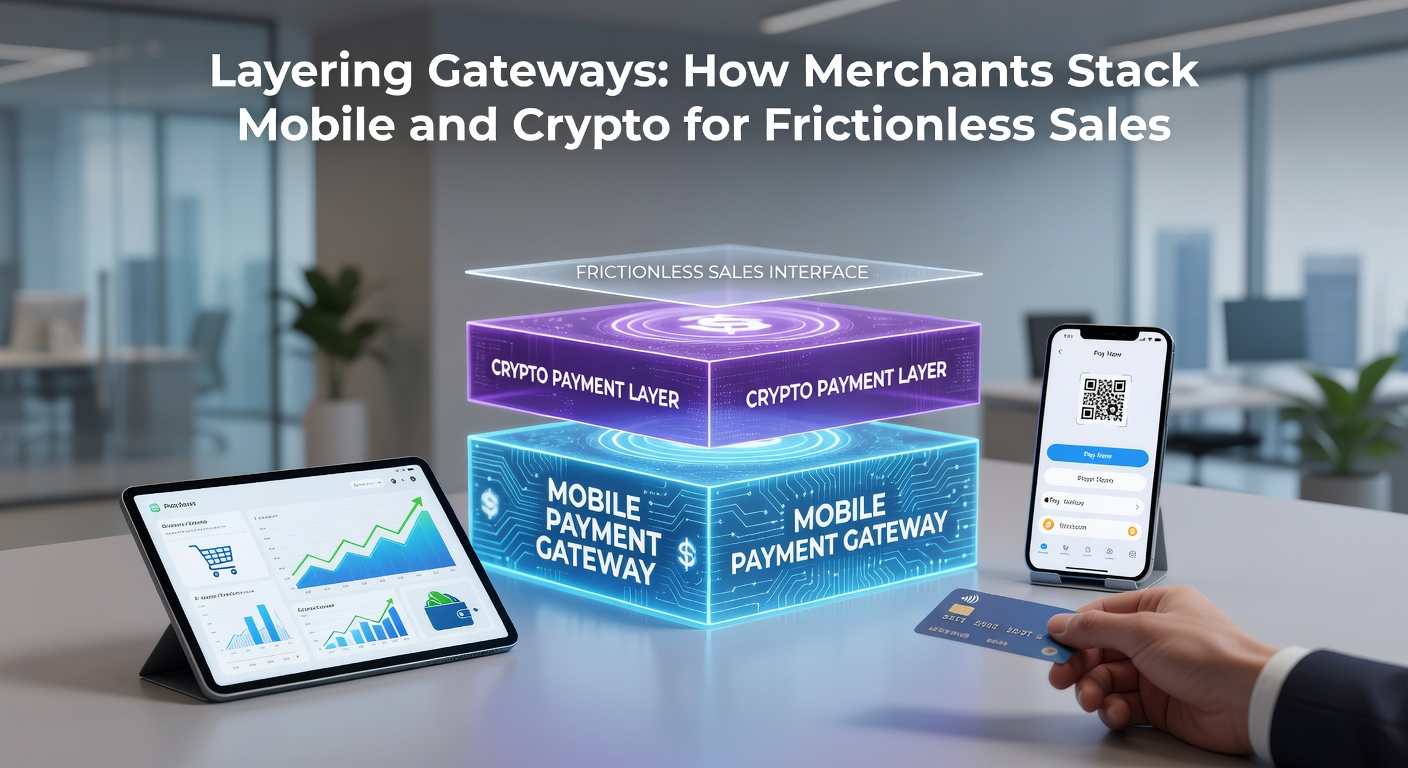
What's interesting here involves how this stacking works at its core: a primary gateway handles fiat via mobile taps, while secondary layers process crypto conversions in real-time, ensuring customers pay however they prefer without forcing choices that lead to cart abandonment; observers note that platforms like Shopify and WooCommerce now support such integrations natively, allowing merchants to activate multiple processors simultaneously.
And yet, the real shift emerged as e-commerce exploded post-pandemic, with layering becoming essential for capturing impulse buys across borders, since mobile users expect one-tap speed and crypto enthusiasts demand volatility hedges baked right into teh purchase.
How Merchants Build These Stacked Systems
Experts describe the process as straightforward yet powerful: merchants first select a robust base gateway like Stripe or Adyen for mobile and card processing, then overlay crypto APIs from providers such as Circle or Kraken, enabling automatic currency swaps via stablecoins like USDC; this setup routes payments dynamically based on customer geolocation or wallet detection, minimizing declines that plague single-method systems.
Take one online retailer specializing in electronics, who implemented layering in early 2025; their system now funnels 40% of European sales through SEPA-linked mobile wallets while converting U.S. crypto inflows to fiat instantly, resulting in a 18% uplift in average order value according to internal metrics shared at a fintech conference.
But here's the thing with implementation details: developers use webhooks to sync confirmations across layers, preventing double-charging or missed refunds, and tools like Plaid bridge bank verifications for hybrid flows; figures from the European Central Bank digital euro report indicate that such multi-layer approaches reduce processing times to under 2 seconds, a game-changer for high-velocity sites.
Key Benefits Driving Adoption
Layering delivers measurable gains in conversion and retention, as customers encounter fewer barriers; research from Baymard Institute shows cart abandonment drops 35% when multiple seamless options appear at checkout, particularly when mobile and crypto sit side-by-side without extra steps.
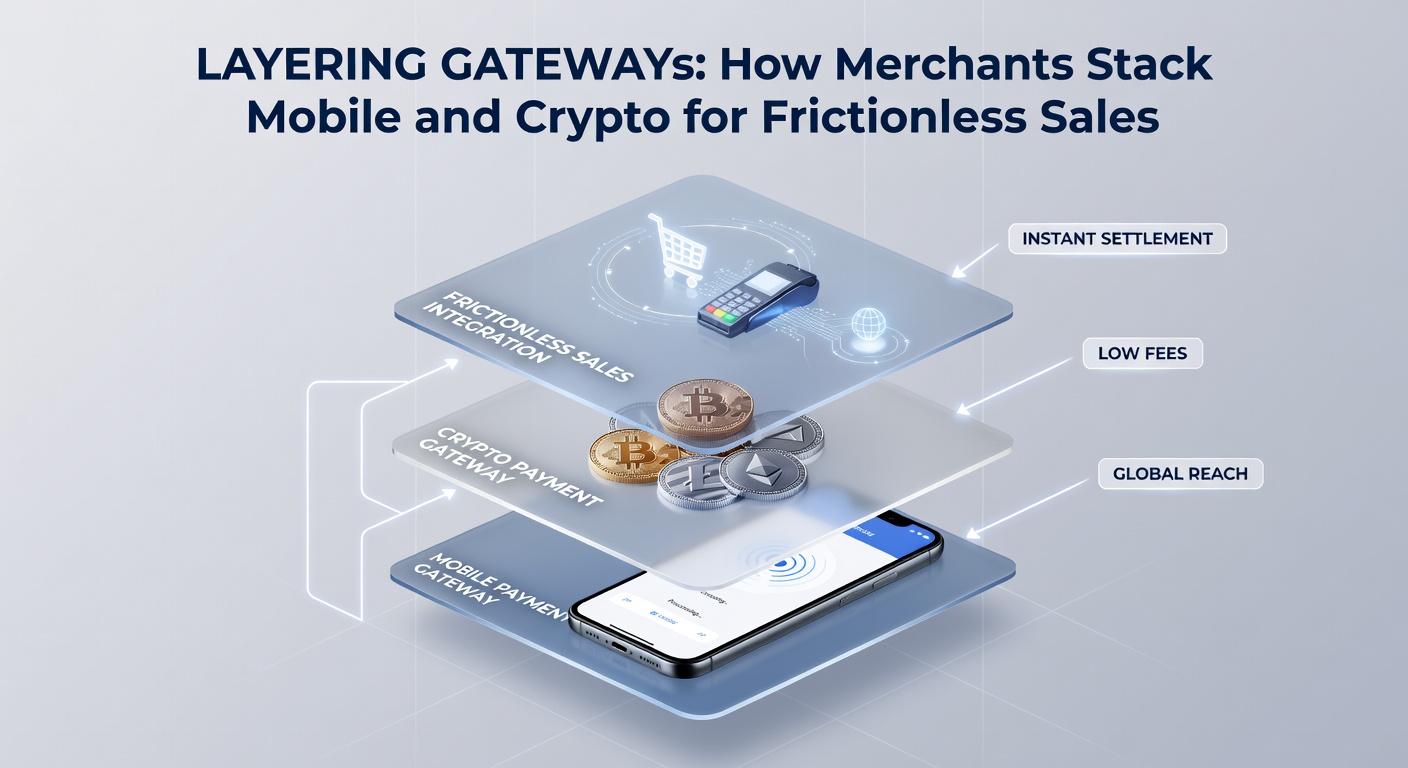
Global reach expands too, since crypto bypasses forex fees and mobile wallets tap underserved markets like Southeast Asia, where GrabPay and GoPay dominate; one apparel brand targeting Gen Z layered Solana payments over NFC mobile, capturing a 22% sales bump from crypto-native buyers who shun traditional cards.
Cost efficiencies pile up as well, with merchants negotiating lower interchange via volume across processors, although chargeback risks demand vigilant monitoring; that's where AI-driven fraud layers come in, scanning anomalies across both mobile taps and blockchain txns in milliseconds.
Now, consider scalability: as traffic spikes during events like Black Friday, stacked gateways distribute load, preventing outages that single providers can't always handle alone.
Real-World Case Studies in Action
Observers point to a digital goods marketplace that layered Phantom Wallet crypto atop Apple Pay in mid-2025; sales in Latin America jumped 45%, fueled by stablecoin preferences amid inflation, while mobile U.S. users stuck to familiar taps, proving the stack's versatility across demographics.
Another example surfaces in gaming, where an indie studio integrated MetaMask with Google Pay; players bought in-game items frictionlessly, with crypto handling microtransactions under $1 that cards often reject, leading to a 30% revenue increase per Newzoo Global Games Market Report benchmarks.
But these successes hinge on compliance: merchants in the EU navigate PSD3 rules by logging all layers transparently, while U.S. sellers align with FinCEN crypto reporting via automated tools; it's not rocket science, yet overlooking this trips up newcomers.
Technical Nuts and Bolts Under the Hood
At the protocol level, RESTful APIs and Web3 SDKs glue everything together; merchants deploy smart routing logic that probes customer wallets first—if crypto detected, it prioritizes low-gas chains like Polygon; otherwise, it falls back to mobile carriers' tokenized auth.
Security layers thicken with MPC wallets splitting keys across gateways, thwarting single-point hacks, and zero-knowledge proofs verify transactions without exposing details; studies from MIT's Digital Currency Initiative highlight how such hybrids cut breach impacts by 60% compared to siloed systems.
Yet integration challenges persist for legacy setups, demanding middleware like Zapier or custom Node.js bridges, although plug-and-play options from gateways are closing that gap rapidly.
Looking ahead to April 2026, regulatory greenlights for CBDCs in pilots across Canada and Australia will likely supercharge layering, as central bank digits slot neatly beside private cryptos and mobile fiat.
Navigating Risks and Regulatory Landscapes
Risks like crypto volatility get mitigated through instant hedging via oracles like Chainlink, converting to stable assets pre-settlement; merchants also cap exposure by blending only 20-30% crypto volume initially, scaling as confidence builds.
Regulatory scrutiny varies by region: Australia's AUSTRAC mandates KYC across crypto layers, while Canada's FINTRAC emphasizes AML flows for mobile-crypto hybrids; data indicates compliant stacks see 15% fewer audits, per industry audits.
Fraud patterns shift too—mobile SIM swaps pair with wallet drains—but behavioral analytics across layers flag them early, with success rates above 95% in layered deployments.
Future Trends Shaping Layered Payments
Trends point toward AI-optimized stacking, where machine learning predicts optimal gateway paths per user, potentially lifting conversions another 10-15%; blockchain interoperability via standards like ERC-4337 will smooth cross-chain crypto layers further.
By April 2026, expect embedded finance to embed these stacks into non-ecom apps, like social commerce on TikTok Shop, blending creator tips in crypto with mobile subs seamlessly.
Merchants who've pioneered this report sustained 25% YoY growth, outpacing single-gateway peers; the writing's on the wall for broader adoption as tools mature.
Wrapping Up the Layering Advantage
Layering gateways stands as a proven tactic for merchants chasing frictionless sales, merging mobile's ubiquity with crypto's borderless speed to capture diverse revenue streams; while setups demand upfront tech savvy, the payoffs in conversion, reach, and resilience make it a staple for forward-thinking operations.
Data underscores the momentum—global layered payment volumes projected to triple by 2027—and those stacking early position themselves at the forefront, ready for whatever payment shifts come next.