Peak Period Transaction Flows: Regional Vendors' Approaches to Fusing Credit and Crypto Rails
Written by Frankie Keller · Jul 24, 2026
Peak Period Transaction Flows: Regional Vendors' Approaches to Fusing Credit and Crypto Rails
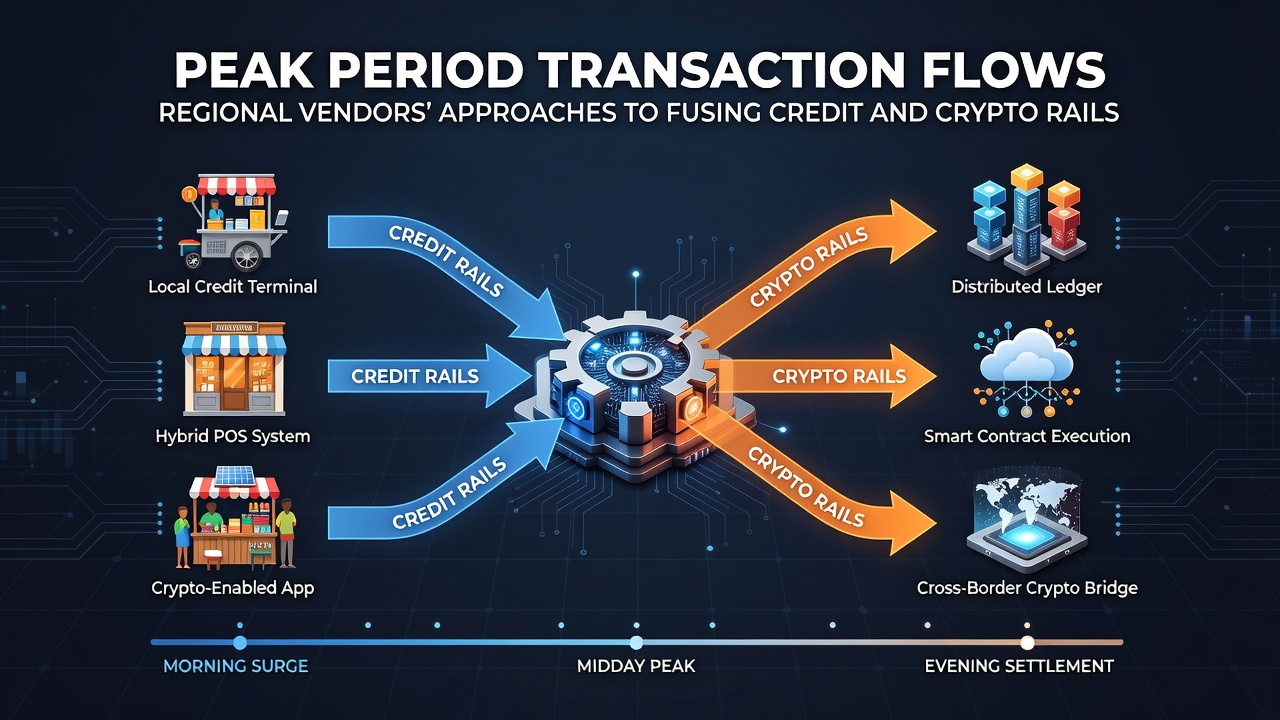
Peak transaction periods place unique demands on payment infrastructure, and regional vendors respond by combining credit card networks with cryptocurrency rails to manage volume spikes. Data from payment processors shows that these fused systems handle surges in both traditional card authorizations and digital asset transfers during high-demand windows. Observers note that vendors in multiple markets adjust routing logic in real time, directing flows based on fee structures, settlement speed, and regulatory checkpoints.
North American Integration Patterns
Vendors across North America have developed layered routing engines that alternate between card networks and crypto rails during peak windows. Research from the Federal Reserve indicates that transaction volumes in the United States rose sharply in the first half of 2026, prompting merchants to activate parallel processing paths. These engines evaluate each incoming payment request against criteria such as network congestion and compliance flags, then select the rail that meets speed and cost targets. In Canada, similar systems incorporate stablecoin options alongside conventional cards, allowing vendors to shift loads when card processors reach capacity thresholds.
Asia-Pacific Vendor Strategies
Merchants in the Asia-Pacific region apply hybrid gateways that fuse local card schemes with regional cryptocurrency exchanges. Studies conducted by the Bank for International Settlements reveal that vendors in Singapore and South Korea route portions of peak-period volume through crypto channels to reduce settlement times from days to minutes. These approaches rely on automated compliance modules that verify transaction origins against anti-money-laundering databases before funds move across rails. Data shows that such synchronization helps vendors maintain throughput when traditional card networks experience temporary slowdowns during major shopping events.
European Compliance Frameworks
European vendors coordinate credit and crypto flows under frameworks outlined by the European Central Bank. Transaction logs from mid-2026 indicate that merchants in Germany and the Netherlands activated multi-rail configurations during summer sales periods to accommodate both card payments and euro-denominated stablecoins. Routing algorithms scan each request for regulatory markers, then direct the flow to the rail that satisfies reporting requirements while preserving processing speed. Figures from industry reports confirm that these blended setups reduced average settlement delays by measurable percentages during July 2026 promotional surges.
Operational Mechanics of Rail Fusion
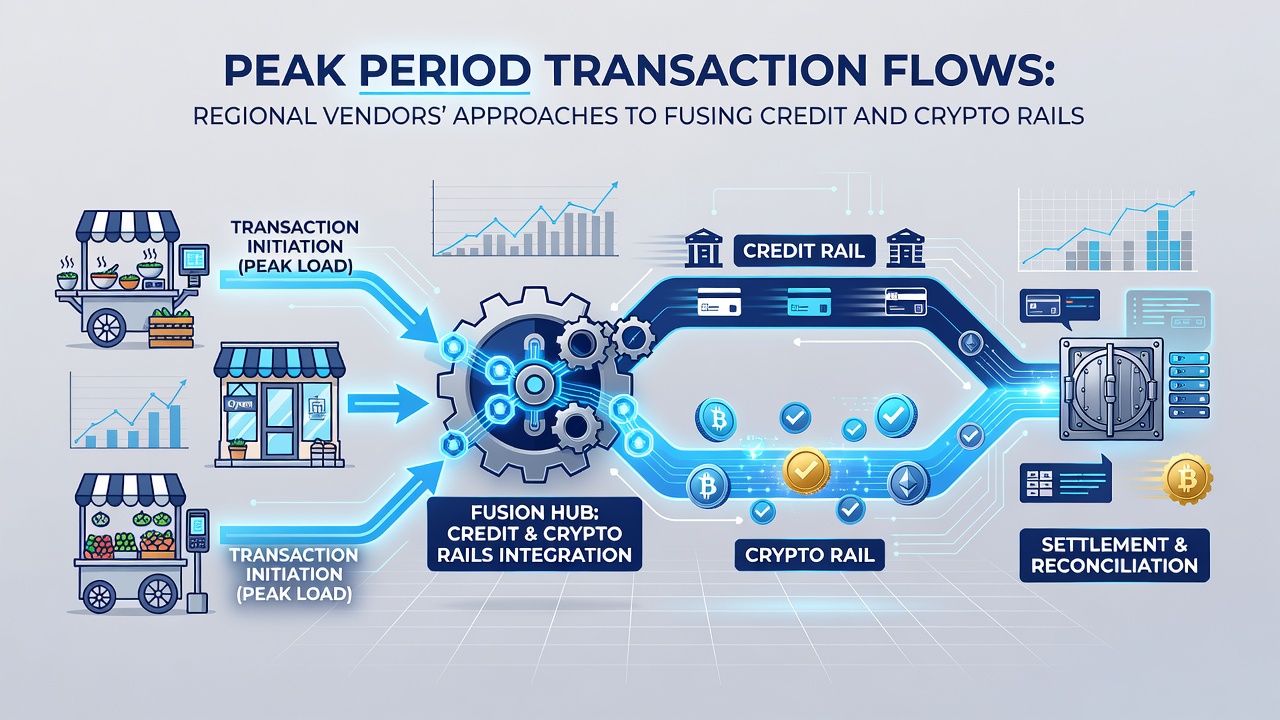
Routing engines at the core of these systems evaluate multiple variables in sequence. First they confirm card network availability, then they check crypto liquidity pools for matching pairs. When both rails remain viable, the engine applies cost and compliance filters to determine the final path. Vendors in emerging markets have documented cases where crypto rails absorbed overflow volume during card network maintenance windows, preserving overall throughput. Research papers from academic institutions in Australia describe similar patterns among regional sellers who time their rail switches around known peak calendars.
Settlement and Risk Distribution
Settlement timing differs across the fused rails, and vendors balance these differences to stabilize cash flow. Card networks typically clear within one to two business days, whereas crypto transfers can finalize in under an hour once network confirmations occur. Data compiled by payment analytics firms shows that regional vendors allocate portions of peak-period receipts to each rail in order to smooth liquidity gaps. Risk controls embedded in the engines flag unusual patterns on either rail, triggering manual review queues when thresholds are crossed. Those controls operate continuously, updating thresholds based on live network conditions.
Conclusion
Regional vendors continue to refine their combined credit and crypto infrastructures to address recurring peak transaction demands. Evidence from regulatory bodies and industry measurements demonstrates that synchronized rail usage supports higher throughput while meeting compliance obligations across jurisdictions. As transaction volumes evolve, the documented approaches provide measurable frameworks for managing flows without reliance on single-rail dependencies.