Unpacking Settlement Cycles: How Pop-Up Vendors Balance Card Processing Fees Against Crypto Volatility in Temporary Retail Spaces
Written by Zoe Klein · Jul 31, 2026
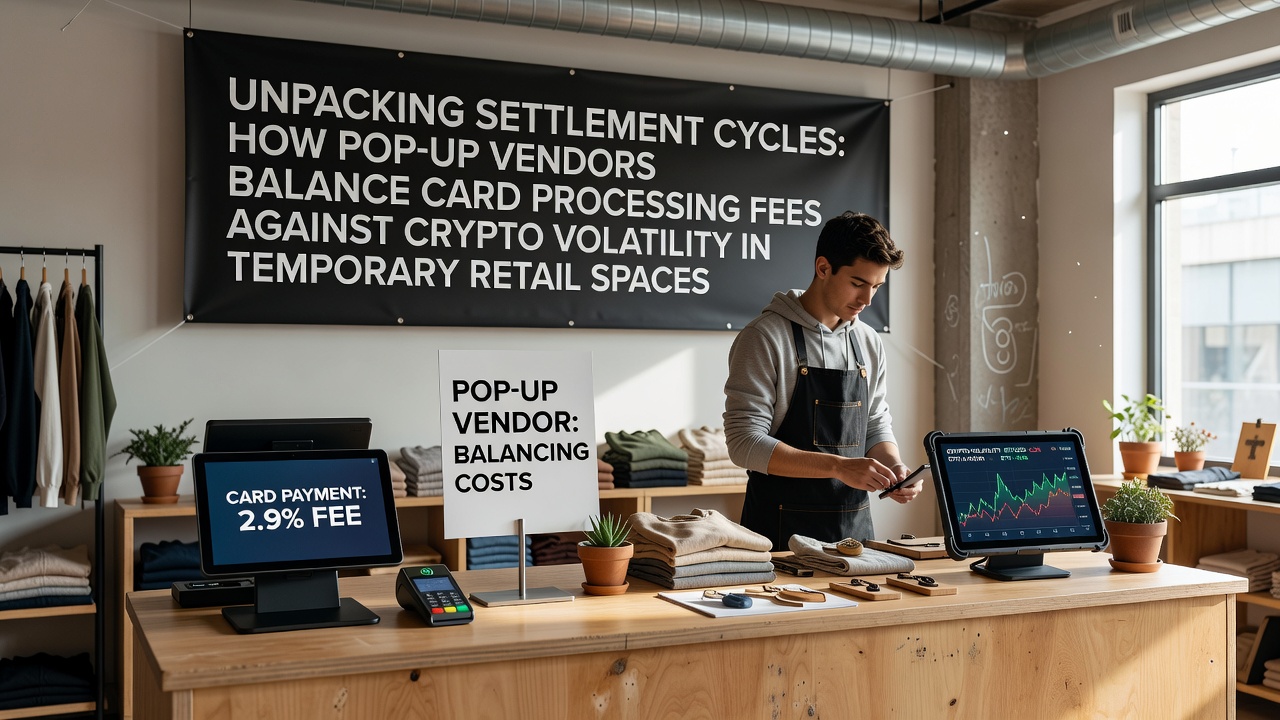
Unpacking Settlement Cycles: How Pop-Up Vendors Balance Card Processing Fees Against Crypto Volatility in Temporary Retail Spaces
Pop-up vendors operating in temporary retail spaces face distinct challenges when managing settlement cycles, since their short-term setups demand rapid access to funds while they weigh the predictable costs of card processing against the price swings common in cryptocurrency transactions. Settlement cycles refer to the time between a sale and the actual transfer of funds to the merchant account, and these timelines vary sharply between traditional card networks and digital asset rails. Data from payment industry reports show that standard card settlements often require one to three business days, whereas crypto transfers can complete in minutes or hours depending on the blockchain network selected.
Card Processing Fees and Settlement Timelines
Card networks impose interchange fees typically ranging from 1.5 to 3.5 percent per transaction plus fixed charges, and these costs remain relatively stable across market conditions. Vendors in temporary locations such as weekend markets or festival booths find that processors offering next-day funding options reduce cash flow pressure, although faster settlement usually carries higher fees. Observers note that many pop-up operators select processors with tiered pricing structures that adjust based on monthly volume, allowing smaller vendors to avoid high fixed monthly costs during slow periods. Research from payment system analyses indicates that in regions with high seasonal activity, vendors often time their setups to coincide with peak events where card volume justifies the fee structure.
Crypto Volatility and Rapid Settlement Benefits
Cryptocurrency options deliver near-instant settlement that appeals to pop-up vendors who pack up and relocate frequently, yet price fluctuations introduce risk that can erode margins if conversion to fiat occurs at unfavorable rates. Vendors commonly convert crypto receipts to stablecoins or immediately sell into local currency to limit exposure, and several platforms now integrate automated conversion tools that trigger at preset thresholds. Figures from blockchain transaction studies reveal that volatility spikes occur more frequently during periods of macroeconomic uncertainty, prompting vendors to monitor market indicators closely before accepting digital assets. In July 2026, transaction volume data showed increased adoption of crypto rails among temporary retailers in urban festival circuits where quick exits from locations required immediate liquidity.
Strategies for Balancing the Two Systems
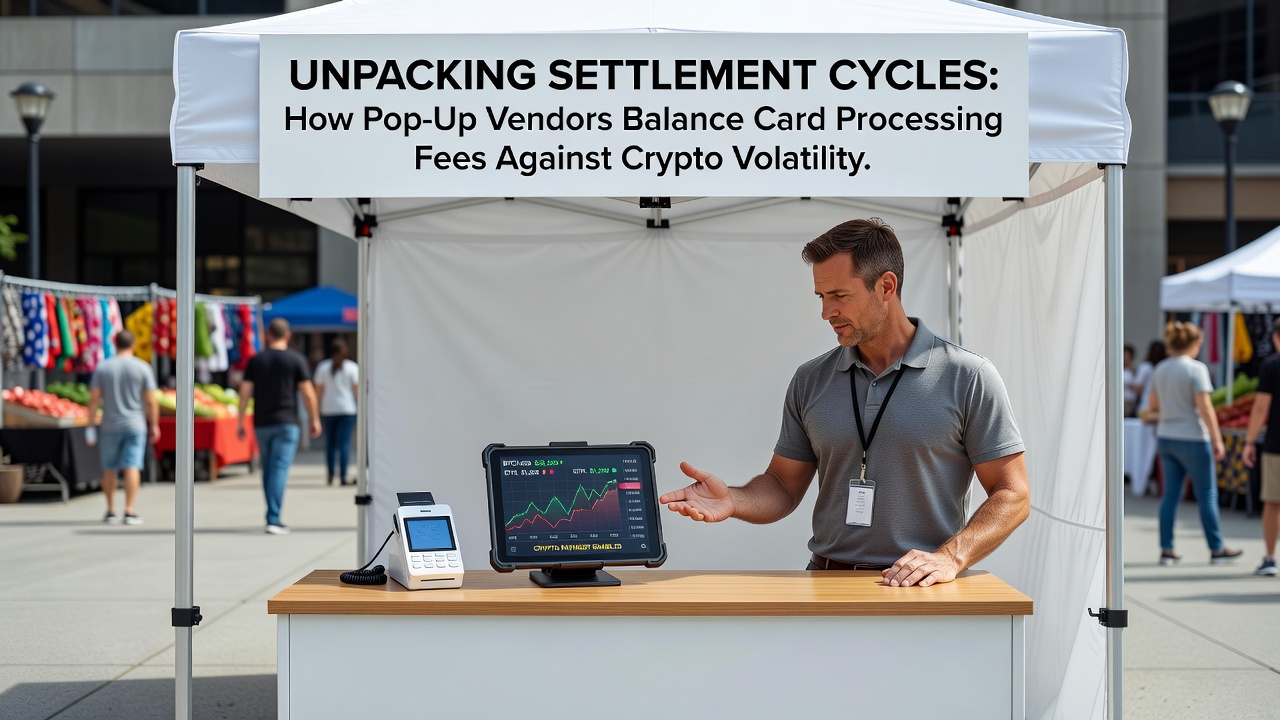
Many pop-up operators employ hybrid approaches that route higher-value transactions through cards for fee predictability while directing smaller or international purchases to crypto for speed. This segmentation reduces overall volatility impact because crypto receipts represent a smaller portion of total revenue. Processors that support multi-rail routing allow vendors to set rules based on transaction size, customer location, and current exchange rates, and these tools have gained traction as integration costs decline. Those who have studied vendor behavior report that successful operators maintain reserve buffers in stable assets to cover any shortfalls arising from crypto price drops during the settlement window. Temporary retail spaces often lack permanent infrastructure, which makes portable terminals capable of handling both card and crypto inputs particularly valuable for maintaining consistent operations across multiple sites.
Regional Patterns and Regulatory Context
European Central Bank payment statistics demonstrate that cross-border pop-up events increasingly incorporate crypto options because settlement speed outweighs volatility concerns when vendors operate across multiple jurisdictions. In contrast, data compiled by the Bank of Canada highlight that domestic card networks continue to dominate in shorter-duration markets where regulatory clarity around digital assets remains limited. Vendors adapt by selecting gateways that comply with local rules while offering flexible payout schedules, and this dual focus on compliance and liquidity shapes equipment choices for each event. Academic studies on retail payment adoption show that education level among vendors correlates with willingness to test crypto rails, since understanding wallet management and tax reporting adds operational complexity.
Practical Examples from Temporary Markets
One documented case involved a collective of craft vendors at a multi-week summer festival who processed 70 percent of sales via cards and routed the remainder through crypto, resulting in settlement funds available within 24 hours for most transactions. Another group operating at weekend food markets used real-time rate alerts to pause crypto acceptance during high-volatility windows, thereby protecting margins without abandoning the faster settlement option entirely. These patterns illustrate how operators adjust tactics based on event duration, expected volume, and historical volatility data rather than relying on a single payment method.
Conclusion
Settlement cycle management for pop-up vendors requires ongoing calibration between card processing predictability and crypto speed advantages, with choices driven by measurable factors such as fee percentages, settlement duration, and observed price variance. As temporary retail continues to expand, the tools available for routing and conversion continue to evolve, providing operators with more precise control over when and how funds become accessible.